3D-ONCO Platform
3D Models 🧫
|
Experimental cellular models are essential tools in both basic and translational research, particularly for investigating tumor mechanisms and evaluating novel therapeutic strategies. |

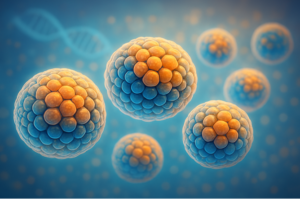
The development of three-dimensional (3D) in vitro models enables a more faithful reproduction of the architecture and key functions of native tissues. Recent advances, including multicellular co-culture systems and microfluidic technologies, aim to better replicate the complexity of the tumor microenvironment and enhance the relevance of these models for oncology research.
The 3D-ONCO platform aims to provide both academic researchers and industry partners with expertise centered on 3D model technologies. Its core activities include the production, characterization, and biobanking of robust, standardized, and ready-to-use 3D models derived from various cancer indications and healthy tissues, together with a comprehensive range of associated services. The platform also develops protocols for the adaptation and increased complexity of existing models. To support these activities, we ensure project management and coordinate administrative and experimental interactions in close collaboration with the other platforms of the CRCL.
For any project-related inquiries: 3Donco@lyon.unicancer.fr
Latest news
Expertise and know-how 🧬
Our Distinctive Strength
Through formal partnerships with the Centre Léon Bérard, the Hospices Civils de Lyon, and the Infirmerie Protestante, we benefit from access to a wide range of freshly collected patient tissue samples.
All biological samples and associated data are collected, processed, and transferred in strict compliance with applicable regulations. These activities are conducted in close collaboration with the PGEB Biobank of the Léon Bérard Comprehensive Cancer Centre (BB-0033-00050, ISO 20387 certified) and the East Lyon Tumor Biobank of the Hospices Civils de Lyon (BB-0033-00046, ISO 20387 certified).
The biological collections, their derivatives (CODECOH), and the associated data processing activities are subject to the required regulatory declarations to the French Data Protection Authority (CNIL) under the MR-004 reference methodology. These declarations are approved by the French Ministry of Higher Education and Research, ensuring that all platform activities comply with the highest ethical and regulatory standards.
Production of 3D models
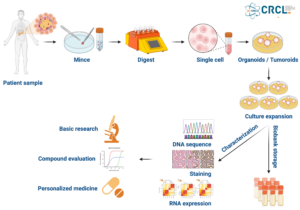
- Step 1 : Support for the design and development of research projects, including assistance with grant applications, the implementation of dedicated clinical protocols, and the organization of associated sample collection workflows.
- Step 2 : Definition and optimization of tissue processing, cell isolation, and culture conditions tailored to different tumor types.
- Step 3 : Processing and handling of fresh tissue samples for the establishment, validation, and routine production of 3D models.
Caracterization 3D models
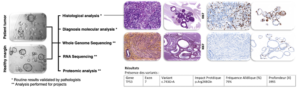 Histological and molecular characterization is carried out in collaboration with the CRCL’s PAR and the HCL’s ACP service.
This service includes histological staining, immunohistochemical analyses, and next-generation sequencing (NGS) of gene panels using assays comparable to those routinely employed in clinical diagnostics. Result interpretation is performed and validated by a certified pathologist.
Using 3D models
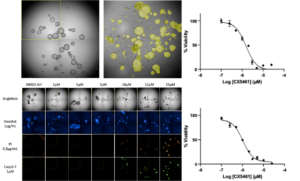
→ Assessment of treatment response (including standard-of-care and investigational chemotherapies, antibody-drug conjugates (ADCs), and other therapeutic agents), through IC₅₀ determination using live-cell imaging (real-time monitoring) and viability assays (both longitudinal and endpoint measurements).
 |
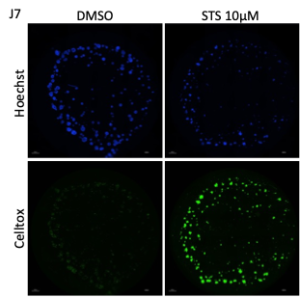 |
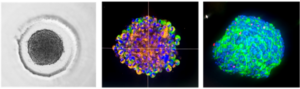
→ Imaging of fixed specimens (FFPE section, cryostat section or whole-mount) and of living 3D models (whole-mount).
→ Use in the context of various readouts (cytometry, scRNA-seq, proteomics, matrisome, secretome, etc.)
EX VIVO testing
Ex vivo predictive testing using organotypic cultures of thick slices (200 μm) prepared from fresh patient tissues enables the evaluation of compound responses in intact tumors while preserving their native architecture and interactions with the tumor microenvironment. Following treatment, tissue slices can be analyzed by imaging after fixation or by downstream applications after dissociation, including flow cytometry, single-cell RNA sequencing (scRNA-seq), and other high-content molecular analyses…

Training
The 3D-ONCO platform offers on-demand training programs covering the production, processing, and analysis of 3D models. These courses are designed for technicians, engineers, PhD students, and researchers from both academic and industrial sectors. Platform managers work closely with participants to define the training format that best meets their specific needs.
The platform also contributes to university curricula and collaborates with other training organizations through lectures, workshops, seminars, and facility visits.
In addition, 3D-ONCO organizes two annual training sessions in partnership with CNRS Formation Entreprises, dedicated to 3D cell culture, organoids, and complex human models. These sessions provide both theoretical and hands-on expertise in state-of-the-art technologies and methodologies used in advanced biomedical research. Learn more
Acknowledge Us in Your Publications!
To help the 3D-ONCO platform continue supporting the scientific community and developing its activities, we kindly ask that you acknowledge our contribution in your publications using the following affiliation:
3D-ONCO Platform, University of Lyon, Claude Bernard Lyon 1 University, INSERM U1052, CNRS UMR 5286, Léon Bérard Comprehensive Cancer Centre, Lyon Cancer Research Center (CRCL), Lyon 69373, France.
-
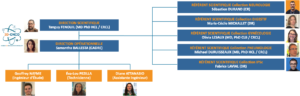
Samantha Ballesta
Operational Director
samantha.ballesta@lyon.unicancer.fr
Tel : 33 (0)4 69 85 62 88Tanguy Fenouil
Scientific Director
tanguy.fenouil01@chu-lyon.fr• Would you like to engage the platform for a project? Please contact us at the following email address : 3Donco@lyon.unicancer.fr
A project form, which must be completed before any project can begin, is available her.• Would you like to visit the platform? The 3D-ONCO platform is located on the campus of the Centre Léon Bérard, at 28 Rue Laënnec, 69008 Lyon, France, in Building CHENEY D (Please note that access to the site is restricted. We kindly ask visitors to contact the platform upon arrival to arrange entry).