

Accueil > Research Teams > Cancer Immune Surveillance and Therapeutic Targeting
Cancer Immune Surveillance and Therapeutic Targeting
SCIENTIFIC OBJECTIVES
Major advances in immunotherapy, particularly those targeting T lymphocytes, have led to significant progress in cancer treatment. Nevertheless, the clinical efficacy of these approaches remains variable. In addition, T lymphocytes are not autonomous in their effector functions and are closely dependent on cells of the innate immune system. In this context, our team’s work is part of a broader effort to place innate immunity at the center of immuno-oncology strategies.
The research conducted by the team aims to characterize the mechanisms by which innate immune cells (i) detect precancerous lesions and (ii) collaborate with T and B lymphocytes to control so-called “immuno-active” tumors. As true sentinels of the immune system, innate immune cells represent the majority of immune cells infiltrating solid tumors and therefore emerge as strategic and promising targets for the development of new immunotherapeutic approaches.
Our central hypothesis is that identifying the mechanisms of innate detection of cells undergoing malignant transformation, as well as analyzing the role of innate immune cells in the control of established tumors, will pave the way for:
- new immunoprevention strategies at the precancerous stage or prior to relapse;
- innovative therapeutic strategies at advanced stages, in combination with current immunotherapies targeting T lymphocytes.
RESEARCH AXES
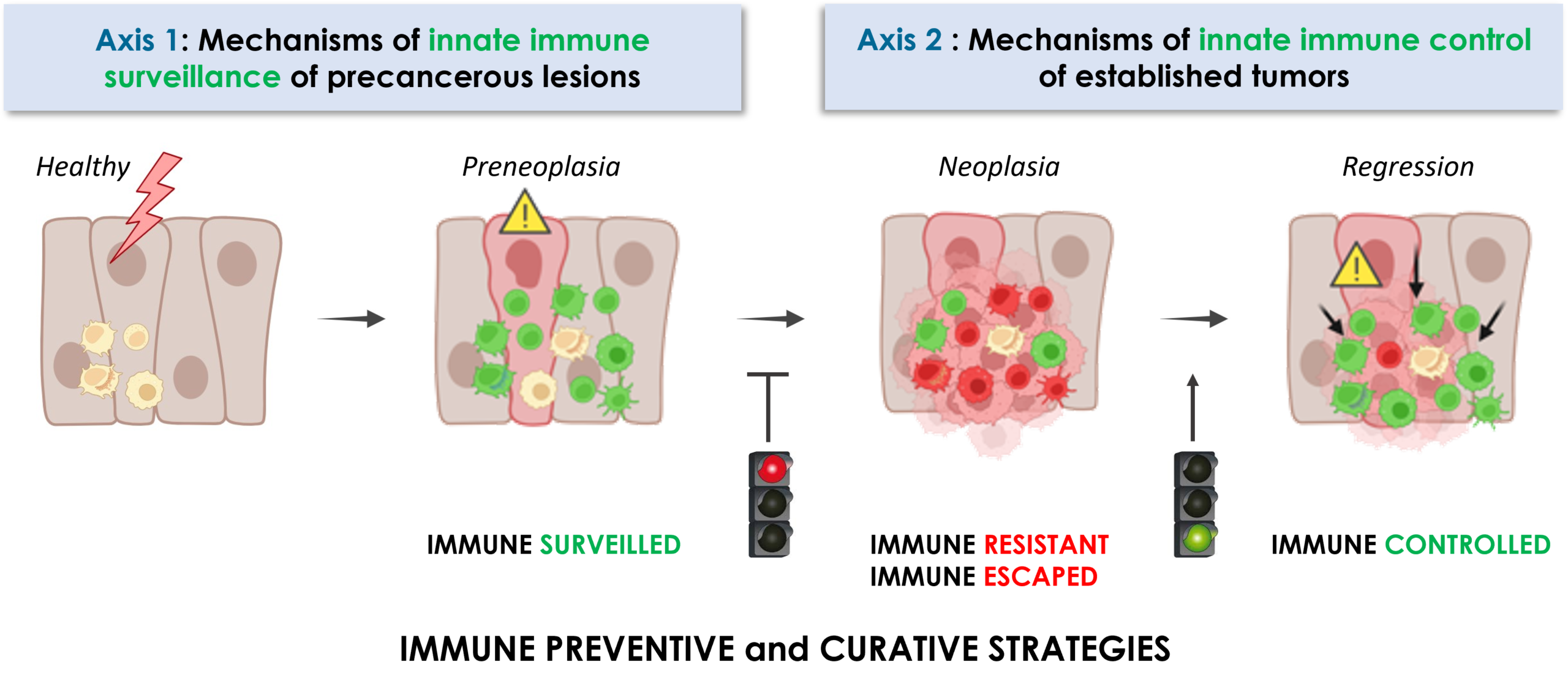
The work of the CISTAR team is based on fundamental and exploratory research structured around two complementary research axes:
Axis 1 – Mechanisms of innate immune surveillance of precancerous lesions
Immune surveillance plays a key role at the early stages of carcinogenesis, and the transition from a precancerous state to invasive cancer represents a critical step in tumor development through immune evasion. However, the innate immune mechanisms involved in the recognition and elimination of precancerous cells remain largely unknown. Within this axis, we aim to identify and characterize innate detection mechanisms that are active at precancerous stages and potentially bypassed or inhibited in established tumors. This work is expected to lead to the emergence of new concepts and the development of innovative preventive or therapeutic strategies based on innate immunity, in order to intercept cancer initiation or progression.
To this end, we leverage unique human clinical contexts that allow access to fresh or fixed tissues from precancerous lesions:
- colorectal polyps
- STIC lesions (Serous Tubal Intraepithelial Carcinoma) in ovarian cancer
- atypical ductal hyperplasia (ADH) in breast cancer
We also develop and use complementary experimental models of tumorigenesis, including genetically engineered mouse models as well as innovative in vitro models (organoids, etc.).
Axis 2 – Mechanisms of innate immune control of established tumors
The second axis takes advantage of rare but highly informative clinical situations, namely so-called “immuno-active” tumors, which are characterized by a spontaneous and effective immune response. We focus in particular on:
- tumors associated with paraneoplastic neurological syndromes
- cancers associated with spontaneous regression, such as low-risk neuroblastoma
These tumors are distinguished by strong infiltration of T and B lymphocytes and dendritic cells, often functionally organized into tertiary lymphoid structures, as well as the local production of antibody-secreting plasma cells, reflecting a local and antigen-specific immune response. However, the mechanisms by which innate immune cells promote this antitumor response and contribute to tumor control remain largely unexplored.
Through an in-depth analysis of the cooperation between innate and adaptive immune systems in these contexts, we aim to identify new targets and immunotherapeutic strategies, particularly for patients who are resistant to current treatments.
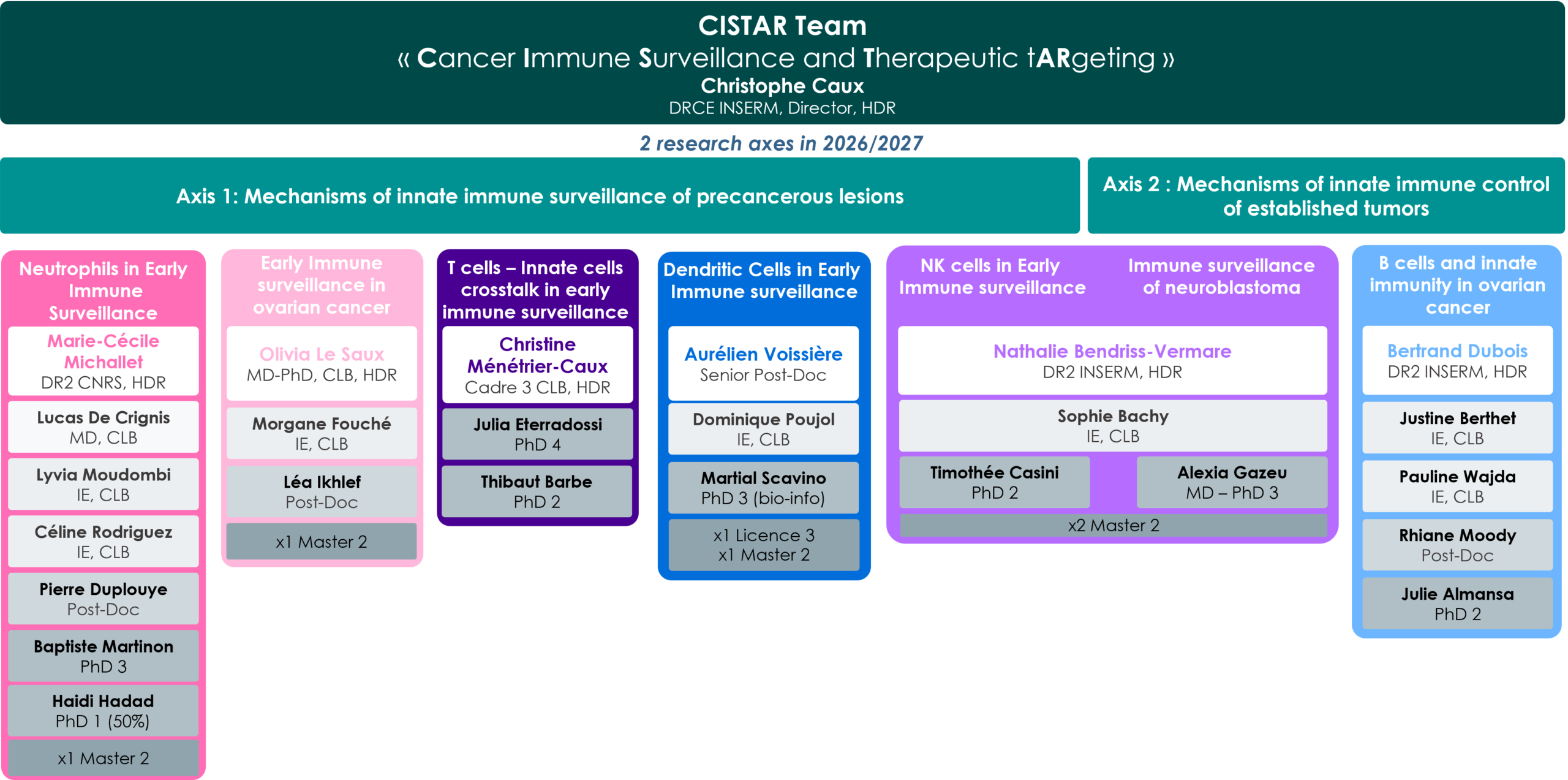
TEAM ORGANIZATIONAL CHART
-
Christophe CAUX
Team leader
christophe.caux@lyon.unicancer.frCheney D – 3rd floor
Centre Léon Bérard
Members
-
FOUCHE-PRONOST Morgane
Ingénieure d'études- Equipe C Caux
Main fundings
Université Claude Bernard Lyon I
Institut National du Cancer (INCa)
Association pour la Recherche sur le Cancer (ARC)
Ligue Contre le Cancer
Agence Nationale pour la Recherche (ANR)
Laboratoire d’Excellence (LabEx) DevWeCan (Grand Emprunt)
Fondation pour la Recherche Médicale (FRM)
Fondation Bristol Myers Squibb (BMS)
AstraZeneca
National collaborations
Breast and gynecological cancers
- Centre Jean Perrin, Department of Biopathology, Clermont-Ferrand – Frédérique PENAULT-LLORCA & Nina ROBIN
- Centre Georges-François Leclerc (CGFL), Dijon – Sylvain LADOIRE & Francois GHIRINGHELLI
- Mechanisms in Integrated Life Sciences (MeLiS), Team “Synaptopathies and autoantibodies” (SYNATAC), Lyon – Jérôme HONNORAT & Virginie DESESTRET
- Institute Of Molecular And Cellular Pharmacology, Université Côte d’Azur, Valbonne – Fabienne ANJUERE
Colon cancers
- Institute for Research on Cancer and Aging (IRCAN), Team “ImmunoSurveillance in Aging and Cancer”, Nice – Julien CHERFILS-VICINI
- Institute of Functional Genomics (IGF), Team “Heterogeneity and plasticity in tumor dissemination and treatment resistance”, Montpellier – Julie PANNEQUIN & Caroline BONNANS
- Montpellier Cancer Research Institute (IRCM), Team “Immunity and Cancer”, Montpellier – Julien FAGET
Pediatric cancers
- Institut Curie, Team “Tumor biology and oncogenesis of neuroblastoma”, Paris – Isabelle JANOUEIX, Gudrun SCHLEIERMACHER
- Nutrition-Genetics and Exposure to Environmental Risks (NGERE), Department of Biopathology, CHRU de Nancy – Hervé SARTELET
- Cancer Research Center of Lyon (CRCL), Team “Cell death and childhood cancers”, Lyon – Marie CASTET
Computational biology
- Toulouse Cancer Research Center (CRCT), Team “Network Biology for Immuno-oncology” (NetB(IO)²), Toulouse – Vera PANCALDI
- International Agency for Research on Cancer (IARC), Team “Computational Cancer Genomics”, Lyon – Lynnette FERNANDEZ CUESTA & Matthieu FOLL
- Inflammation Research Center (CRI), Team “Oncogenic inflammation and tumor development axis”, Paris – Remy NICOLLE
- Cancer Genomics Platform, Cancer Research Center of Lyon (CRCL), Lyon – Cyril DEGLETAGNE
- “Gilles Thomas” Bioinformatics Platform, Cancer Research Center of Lyon (CRCL), Lyon – Anthony FERRARI & Laurie TONON
Mouse models
- Center for Immunology of Marseille-Luminy (CIML), Team “Dendritic cells and antiviral defense”, Marseille – Marc DALOD
- Centre International de Recherche en Infectiologie (CIRI), Team “Lymphocyte activation and signaling”, Lyon – Thierry WALZER & Antoine MARCAIS
- Pierre & Marie Curie University, Paris – Gilles MARODON
- Cancer Research Center of Lyon (CRCL), Team “TGF-beta and Immune response”, Lyon – Julien MARIE
Other collaborations
- Institut Gustave Roussy, Villejuif – Laurence ZITVOGEL & Aurélien MARABELLE
- Toulouse Institute for Infectious and Inflammatory Diseases (INFINITY), Toulouse – Benoit SALOMON & Isabelle LAMSOUL
- Institut des Biomolécules Max Mousseron (IBMM), Montpellier – Suzanne PEYROTTES
- Infectious Disease Research Institute of Montpellier (IDRIM), Montpellier – Laurent CHALOIN
International collaborations
- Karolinska Institutet, Department of Cell and Molecular Biology, Stockholm, Sweden – Jean HAUSSER
- University of Tübingen, Tübingen, Germany – Manfred CLAASSEN
- Institut Jules Bordet, Université Libre de Bruxelles, Brussels, Belgium – Christos SOTIRIOU
- Cancer Patients Europe, Brussels, Belgium – Antonella CARDONE
- Antwerp University Hospital (UZA), Edegem, Belgium – Senada KOLJENOVIC
Publications
-
Neoadjuvant immune checkpoint blockade before chemoradiation for cervical squamous carcinoma (GINECO window-of-opportunity COLIBRI study): a phase II trial
Ray-Coquard I, Kaminsky-Forrett MC, Ohkuma R, de Montfort A, Joly F, Treilleux I, Ghamry-Barrin S, Bello-Roufai D, Saintigny P, Angelergues A, Michon L, Hardy-Bessard AC, Attignon V, Auclair J, Chemin G, Lainé A, Péré H, Veyer D, Savoye AM, Berthet J, Caux C, Lecuru F, Dubois B*, Bétrian S* Nature Communications
-
High expression of CCL2 correlated with dendritic cell recruitment in neuroblastomas associated with opsoclonus-myoclonus syndrome.
Voirin M*, Gazeu A*, Dumont B, Voissière A, Jannot L, Plantaz D, Sturm N, Ber N, Chastagner P, Picard C, Dijoud F, Caux C, Bendriss-Vermare N, Sartelet H Lab Invest
IntegrAlign: A comprehensive tool for multi-immunofluorescence panel integration through image alignment.Hermet L, Laoubi L, Scavino M, Doffin AC, Gazeu A, Berthet J, Pillat B, Tissot S, Rusakiewicz S, Michallet MC, Bendriss-Vermare N, Valladeau-Guilemond J, Hausser J, Caux C, Hubert M. Bioinformatics
Dendritic cells: the central partner for cancer immunityLaoubi L*, Gobbini E*, Duplouye P, Hubert M, Caux C, Bendriss-Vermare N, Valladeau-Guilemond J, Voissière A Oncoimmunology
Interleukin-35 impairs human NK cell effector functions and induces their ILC1-like conversion with tissue residency featuresPicant V*, Revol-Bauz L*, Voissière A, Casini T, Picard E, Poujol D, Rodriguez C, Degletagne C, Caux C, Bendriss-Vermare N Nature Communications
Type III interferon primes pDCs for TLR7 activation and antagonizes immune suppression mediated by TGF-B and PGE2Sakref C*, Saby A*, Rodriguez C, Ardin M, Moudombi L, Doffin AC, Gobbini E, Voissiere A, Besson L, Laoubi L, Böttcher J, Depil S, Hubert M, Bendriss-Vermare N, Caux C, Valladeau-Guilemond J Nature Communications
The spatial organization of cDC1 with CD8+ T cells is critical for the response to immune checkpoint inhibitors in melanoma patientsGobbini E, Hubert M, Doffin AC, Eberhardt A, Hermet L, Li D, Duplouye P, Ghamry-Barrin S, Berthet J, Benboubker V, Grimont M, Sakref C, Perrot J, Tondeur G, Harou O, Lopez J, Dubois B, Dalle S, Caux C, Caramel J, Valladeau-Guilemond J Cancer Immunology Research
-
Immunogenomic profiling of the randomized NeoPembrOv clinical trial 2 reveals regulatory T cells and the VEGFR2 angiogenic axis as promising 3 actionable targets to overcome immunoresistance of high-grade ovarian 4 carcinomas.
Le Saux O, Ardin M, Berthet J, Barrin S, Bourhis M, Cinier J, Lounici Y, Treilleux I, Just PA, Bataillon G, Savoye AM, Mouret-Reynier MA, Coquan E, Derbel O, Jeay L, Bouizaguen S, Labidi-Galy I, Tabone-Eglinger S, Thomas E, Ménétrier-Caux C, Tartour E, Galy-Fauroux I, Stern MH, Terme M, Caux C, Dubois B*C, Ray-Coquard I Nature Communications
Modulation of Blood T cell polyfunctionality and HVEM/BTLA expression are critical determinants of clinical outcome in anti-PD1-treated metastatic melanoma patientsDalle S*, Verronese E*, N’Kodia A*, Bardin C, Rodriguez C, Andrieu T, Eberhardt A, Chemin G, Hasan U, Le-Bouar M, Caramel J, Amini-Adle M, Bendriss-Vermare N, Dubois B, Caux C*, Ménétrier-Caux C OncoImmunology
The CSF-1R inhibitor pexidartinib affects FLT3-dependent DC differentiation and may antagonize durvalumab in patients with advanced cancersVoissière A*, Gomez-Roca C*, Chabaud S*, Rodriguez C*, Nkodia A, Berthet J, Montane L, Bidaux AS, Treilleux I, Eberst L, Terret C, Korakis I, Garin G, Pérol D, Delord JP, Caux C, Dubois B, Ménétrier-Caux C*, Bendriss-Vermare N* Science Translationnal Medicine
-
Mdr1-expressing CD4+ t cells with TH1.17 features resist to neoadjuvant chemotherapy and are associated with breast cancer clinical response
Anthony Di Roio, Margaux Hubert, Laurie Besson, Marion Bossennec, Céline Rodriguez,Yenkel Grinberg-Bleyer, Guilhem Lalle, Lyvia Moudombi, Raphael Schneider, Cyril Degletagne, Isabelle Treilleux, Daniel J Campbell, Séverine Metzger, Thomas Duhen, Olivier Trédan, Christophe Caux, Christine Ménétrier-Caux The Journal for ImmunoTherapy of Cancer
Phenotypes and Functions of Human Dendritic Cell Subsets in the Tumor MicroenvironmentSakref C, Bendriss-Vermare N, Valladeau-Guilemond J Methods Mol Biol
Isolation and Identification of Dendritic Cell Subsets from Human and Mouse TumorsRocca Y*, Voissière A*, Valladeau-Guilemond J, Bendriss-Vermare N Methods Mol Biol
TCR-engineered T cell therapy in solid tumors: State of the art and perspectivesBaulu E, Gardet C, Chuvin N, Depil S Science Advances
-
Heterogeneity and functions of tumor-infiltrating antibody secreting cells: lessons from breast, ovarian and other solid cancers
Lounici Y*, Le Saux O*, Chemin G, Wajda P, Barrin S, Berthet J, Caux C and Dubois BC Cancers (Basel)
Direct T-cell Presentation by cDC1: The Key Feature for Cancer Vaccine Success?Hubert M, Caux C, Valladeau-Guilemond J Cancer Immunol Res
Gene signature of circulating platelet-bound neutrophils is associated with poor prognosis in cancer patientsLecot P, Ardin M, Dussurgey S, Alcazer V, Moudombi L, Hubert M, Swalduz A, Hernandez-Vargas H, Viari A, Caux C, Michallet MC Int J Cancer
HERVs characterize normal and leukemia stem cells and represent a source of shared epitopes for cancer immunotherapy.Vincent Alcazer, Paola Bonaventura, Laurie Tonon, Emilie Michel, Virginie Mutez, Clémentine Fabres, Nicolas Chuvin, Rasha Boulos, Yann Estornes, Véronique Maguer-Satta, Kevin Geistlich, Alain Viari, Klaus H. Metzeler, Wolfgang Hiddemann, Aarif M. N. Batch, Tobias Herold, Christophe Caux, Stéphane Depil
The effect of acute aerobic exercise before immunotherapy and chemotherapy infusion in patients with metastatic non-small-cell lung cancer: Protocol for the ERICA feasibility trial
American Journal of HematologyGouez M, Pérol O, Pérol M, Caux C, Ménétrier-Caux C, Villard M, Walzer T, Delrieu L, Saintigny P, Marijnen P, Pialoux V, Fervers B. BMJ Open
Identification of shared tumor epitopes from endogenous retroviruses inducing high avidity cytotoxic T cells for cancer immunotherapyP. Bonaventura, V. Alcazer, V. Mutez, L. Tonon, J. Martin, N Chuvin, E Michel, R Boulos, Y Estornes, J. Valladeau-Guilemond, A. Viari, C. Caux, S. Depil. Science Advances
-
Type 1 conventional dendritic cells and interferons are required for spontaneous CD4+ and CD8+ T-cell protective responses to breast cancer
Mattiuz R, Brousse C, Ambrosini M, Cancel JC, Bessou G, Mussard J, Sanlaville A, Caux C, Bendriss-Vermare N, Valladeau-Guilemond J, Dalod M, Crozat K. Clin Transl Immunology
The cGAS-STING pathway: a new “innate” weapon against cancerBacar H, Michallet MC. Med Sci (Paris)
Early changes in the immune microenvironment of oral potentially malignant disorders reveal an unexpected association of M2 macrophages with oral cancer free survivalBouaoud J, Foy JP, Tortereau A, Michon L, Lavergne V, Gadot N, Boyault S, Valantin J, De Souza G, Zrounba P, Bertolus C, Bendriss-Vermare N, Saintigny P. Oncoimmunology
Recruitment and expansion of Treg cells in the tumor environment – How to target them?Cinier J, Hubert M, Besson L, Di Roio A, Rodriguez C, Lombardi V, Caux C, Ménétrier-Caux C Cancers
Adrenal gland as a sanctuary site for immunotherapy in patients with microsatellite instability-high metastatic colorectal cancerCohen, R., Jonchère, V., De La Fouchardière, C., Ratovomanana, T., Letourneur, Q., Ayadi, M., Armenoult, L., Buisson, A., Sarabi, M., Pellat, A., et al. J Immunother Cancer
4-Substituted-1,2,3-triazolo nucleotide analogues as CD73 inhibitors, their synthesis, in vitro screening, kinetic and in silico studies Immunosurveillance du cancer et ciblage thérapeutiqueGhoteimi R, Braka A, Rodriguez C, Cros-Perrial E, Nguyen VT, Uttaro JP, Mathé C, Chaloin L, Ménétrier-Caux C, Jordheim LJ, Peyrottes S. Bioorganic Chemistry
-
Hepatitis B virus exploits C-type lectin receptors to hijack cDC1s, cDC2s and pDCs
Ouaguia L, Dufeu-Duchesne T, Leroy V, Decaens T, Reiser JB, Sosa Cuevas E, Durantel D, Valladeau-Guilemond J, Bendriss-Vermare N, Chaperot L, Aspord C. Clinical & Translational Immunology
BDCA1+ cDC2s, BDCA2+ pDCs and BDCA3+ cDC1s reveal distinct pathophysiologic features and impact on clinical outcomes in melanoma patientsSosa Cuevas E, Ouaguia L, Mouret S, Charles J, De Fraipont F, Manches O, Valladeau-Guilemond J, Bendriss-Vermare N, Chaperot L, Aspord C. Clinical & Translational Immunology
Neoadjuvant immune checkpoint inhibitors in cancer, current state of the artO Le Saux, Y Lounici, P Wajda, S Barrin, C Caux, B Dubois, and I Ray-Coquard. Critical Reviews in Oncology/hematology
Viral reactivation in acute leukemia patients receiving allogeneic hematopoietic stem cell transplantation in complete remission: stimulation of the immune systemLoron S, Sobh M, Lina B, Ader F, Renault M, Michallet MC, Labussiere H, Michallet M. Blood
Expression of TAM-R in human immune cells and unique regulatory function of MERTK in IL-10 production by tolerogenic DC. Giroud, S. Renaudineau, L. Gudefin, A. Calcei, T. Menguy, C. Rozan, J. Mizrahi, C. Caux, V. Duong and J. Valladeau-Guilemond Frontiers Immunology
Inflammasome Deletion Promotes Anti-tumor NK Cell Function in an IL-1/IL-18 Independent Way in Murine Invasive Breast CancerGuey B, Bodnar-Wachtel M, Drouillard A, Eberhardt A, Pratviel M, Goutagny N, Bendriss-Vermare N, Puisieux I, Caux C, Walzer T, Petrilli V. Frontiers in Oncology
Compared descriptive analysis of immunologic landscape in soft tissue sarcoma and GISTDufresne A, Lesluyes T, Ménétrier-Caux C, Brahmi M, Darbo E, Toulmonde M, Italiano A, Mir O, Le Cesne A, Le Guellec S, Valentin T, Chevreau C, Bonvalot S, Penel N, Coindre JM, Caux C, Blay JY, Chibon F. OncoImmunology
Durable and controlled depletion of neutrophils in miceBoivin G, Faget J, Ancey PB, Gkasti A, Mussard J, Engblom C, Pfirschke C, Contat C, Pascual J, Vazquez J, Bendriss-Vermare N, Caux C, Vozenin MC, Pittet MJ, Gunzer M, Meylan E. Nature Communications
IFN-III is selectively produced by cDC1 and predicts good clinical outcome in breast cancerHubert M, Gobbini E, Couillault C, Manh TV, Doffin AC, Berthet J, Rodriguez C, Ollion V, Kielbassa J, Sajous C, Treilleux I, Tredan O, Dubois B, Dalod M, Bendriss-Vermare N, Caux C*, Valladeau-Guilemond J*. (*co-last authorship) Science Immunology
Current advances in immunotherapy in ovarian cancerLe Saux O, Dubois B, Stern MH, Terme M, Tartour E, Classe JM, Chopin N, Trédan O, Caux C, Ray-Coquard I. Bull Cancer.
CD163+ TAMs accumulation in breast cancer patients reflects both local differentiation signals and systemic skewing of monocytesRamos RN, Rodriguez C, Hubert M, Ardin M, Treilleux I, Ries CH, Lavergne E, Chabaud S, Colombe A, Trédan O, Gomes Guedes H, Laginha F, Richer W, Piaggio E, Barbuto JAM, Caux C*, Ménétrier-Caux C*, and Bendriss-Vermare N*(* co-last authorship) Clinical & Translational Immunology
Repurposing infectious disease vaccines for intratumoral immunotherapyMelero I, Gato M, Shekarian T, Aznar A, Valsesia-Wittmann S, Caux C, Etxeberrria I, Teijeira A, Marabelle A. J Immunother Cancer
Repurposing infectious disease vaccines for intratumoral immunotherapyMelero I, Gato M, Shekarian T, Aznar A, Valsesia-Wittmann S, Caux C, Etxeberrria I, Teijeira A, Marabelle A. J Immunother Cancer .
Le rôle des lymphocytes T régulateurs dans l’activité anti-tumorale des anti-CTLA-4Thierry K & Ménétrier-Caux C. Médecine & Science
Neutrophils and cancer: discovery of a new mechanism of cellular toxicity and therapeutic perspectivesVictoor C. and Dubois B. Med Sci (Paris)
-
Hepatitis B Virus-induced modulation of liver macrophage function promotes hepatocyte infection
Faure-Dupuy S, Delphin M, Aillot L, Dimier L, Lebossé F., Fresquet J, Parent R, Matter MS, Rivoire M, Bendriss-Vermare N, Salvetti A, Heide D, Flores L, Klumpp K, Lam A, Zoulim F, Heikenwaelder M, Durantel D, and Lucifora J Journal of Hepatology
Methotrexate restores CD73 expression on Th1.17 in rheumatoid arthritis and psoriatic arthritis patients and may contribute to its anti-inflammatory effect through Ado productionBossennec M, Rodriguez C, Hubert M, Di-Roio A, Machon C, Jérôme Guitton J, Battiston-Montagne P, Couturier M, Marotte H, Caux C, Coury F, Ménétrier-Caux C. Journal of Clinical Medicine
Repurposing rotavirus vaccines for intratumoral immunotherapy can overcome resistance to immune checkpoint blockadeShekarian T, Sivado E, Jallas AC, Depil S, Kielbassa J, Janoueix-Lerosey I, Hutter G, Goutagny N, Bergeron C, Viari A, Valsesia-Wittmann S, Caux C, Marabelle A. Sci Transl Med.
Adenosine mediates functional and metabolic suppression of peripheral and tumor-infiltrating CD8+ T cellsMastelic-Gavillet B, xNavarro Rodrigo B, Décombaz L, Wang H, Ercolano G, Rita Ahmed1, Elena Lozano L, Ianaro A, Derré L, Valerio M, Tawadros T, Jichlinski P, Tu Nguyen-Ngoc T, Speiser DE, Verdeil G, Gestermann N, Dormond O, Kandalaft L, Coukos G, Jandus C, Ménétrier-Caux C, Caux C, Ho PC, Romero P, Harari A, Vigano S Journal of Immunotherapy of Cancer
Neutrophil heterogeneity in cancer: from biology to therapiesLecot P, Sarabi M, Pereira Abrantes M, Mussard J, Koenderman L, Caux C, Bendriss-Vermare N, Michallet M-C. Frontiers in Immunology.
Human tumor-infiltrating dendritic cells: from in situ visualization to high throughput analysesHubert M, Gobbini E, Bendriss-Vermare N, Caux C, Valladeau-Guilemond J. Cancers
Targeting adenosine in cancer immunotherapy to enhance T-cell functionVigano S, Alatzoglou D, Irving M, Ménétrier Caux C, Caux C, Romero P, Coukos G Frontiers in Immunology
A novel combination of chemotherapy and immunotherapy controls tumor growth in mice with a human immune systemBurlion A, Ramos RN, Pukar KC, Sendeyo K, Corneau A, Ménétrier-Caux C, Piaggio E, Olive D, Caux C and Marodon G Oncoimmunology
Lymphopenia in Cancer Patients and its Effects on Response to Immunotherapy: an opportunity for combination with Cytokines?Ménétrier-Caux C, Ray-Coquard I, Blay JY, Caux C Journal for Immunotherapy of Cancer
Immunopathological characterization of ovarian teratomas associated with anti-N-Methyl-D-Aspartate receptor encephalitisChefdeville A, Treilleux I, Mayeur ME, Couillault C, Picard G, Bost C, Mokhtari K, Vasiljevic A, Meyronet A, Rogemond V, Psimaras D, Dubois B, Honnorat J, Desestret V. Acta Neuropathol. Com.
Cold tumors: a therapeutic challenge for immunotherapyBonaventura P, Shekarian T, Alcazer V, Valladeau-Guilermond J, Valsesia-Wittmann S, Amigorena S. et al Frontiers in Immunology
Circulating and hepatic BDCA1+, BDCA2+, and BDCA3+ dendritic cells are subverted in patients with chronic HBV infectionOuaguia L, Leroy V, Dufeu-Duchesne T, Durantel D, Decaens T, Hubert M, Valladeau-Guilemond J, Bendriss-Vermare N, Chaperot L, Aspord C Frontiers in Immunology
Neoepitopes-based vaccines: challenges and perspectivesAlcazer V, Bonaventura P, Tonon L, Wittmann S, Caux C, Depil S Eur J Cancer
CD73 expression in normal and pathological human hepatobiliopancreatic tissues.Sciarra A, Monteiro I, Ménétrier-Caux C, Caux C, Gilbert B, Halkic N, La Rosa S, Romero P, Sempoux C, de Leval L. Cancer Immunol Immunother
-
Immunotherapy and targeted therapy, a promising combination to fight cancer
Andrieu N, Bendriss-Vermare N Med Sci
Contribution of B lymphocytes in acquired resistance to targeted therapies in metastatic melanomaFourneaux C, Dubois B. Med Sci
Hepatitis B Virus Blocks the CRE/CREB Complex and Prevents TLR9 Transcription and Function in Human B CellsTout I, Gomes M, Ainouze M, Marotel M, Pecoul T, Durantel D, Vaccarella S, Dubois B, Loustaud-Ratti V, Walzer T, Alain S, Chemin I, Hasan U J Immunol .
MAVS deficiency induces gut dysbiotic microbiota conferring a pro-allergic phenotypePlantamura E, Dzutsev A, Chamaillard M, Djebali S, Moudombi L, Boucinha L, Grau M, Macari C, Bauché D, Dumitrescu O, Rasigade JP, Lippens S, Plateroti M, Kress E, Cesaro A, Bondu C, Lina G, Bentaher-Belaaouaj A, Marie J, Caux C, Trinchieri G, Marvel J, Michallet MC Proc Natl Acad Sci U S A
MDR1 in immunity: friend or foe?Bossennec M, Di Roio A, Caux C, Ménétrier Caux C. ONcoimmunology
Développement des CAR-T dans les tumeurs solidesAlcazer V, Delenda C, Poirot L, Depil S Bull Cancer
Nouvelles approches vaccinales en cancérologie.Depil S, Bonaventura P, Alcazer V, Tonon L. Bull Cancer
-
BAD-LAMP controls TLR9 trafficking and signalling in human plasmacytoid dendritic cells
Combes A, Camosseto V, N’Guessan P, Argüello RJ, Mussard J, Caux C, Bendriss-Vermare N, Pierre P & and Gatti E Nature Communications
Cancer immunotherapy via systemic RNA delivery to dendritic cellsRichaud M and Bendriss-Vermare N. Med
Infiltrated B cells promote pancreatic ductal adenocarcinomaSeillet C and Dubois B Med Sci
Neutrophil: an infiltrated agent with new antitumor skillsMazet J, Michallet MC. Med Sci
The immune microenvironment of HPV-negative oral squamous cell carcinoma from never-smokers and never-drinkers patients suggests higher clinical benefit of IDO1 and PD1/PD-L1 blockadeFoy JP, Bertolus C, Michallet MC, Deneuve S, Incitti R, Bendriss-Vermare N, Albaret MA, Ortiz-Cuaran S, Thomas E, Colombe A, Py C, Gadot N, Michot JP, Fayette J, Viari A, Van den Eynde B, Goudot P, Devouassoux-Shisheboran M, Puisieux A, Caux C, Zrounba P, Lantuejoul S, Saintigny P. Ann Oncol
Emerging role of the Unfolded Protein Response in Tumor Immunosurveillance.Vanacker H, Vetters J, Moudombi L, Caux C, Janssens S, Michallet MC. Trends Cancer .
Cross Talk between Inhibitory Immunoreceptor Tyrosine-Based Activation Motif-Signaling and Toll-Like Receptor Pathways in Macrophages and Dendritic CellsHirsch I, Janovec V, Stranska R, Bendriss-Vermare N Front Immunol .