

Innovation: A 3D bioprinting technique for tumors developed at the CRCL
Publié le 21/04/2026
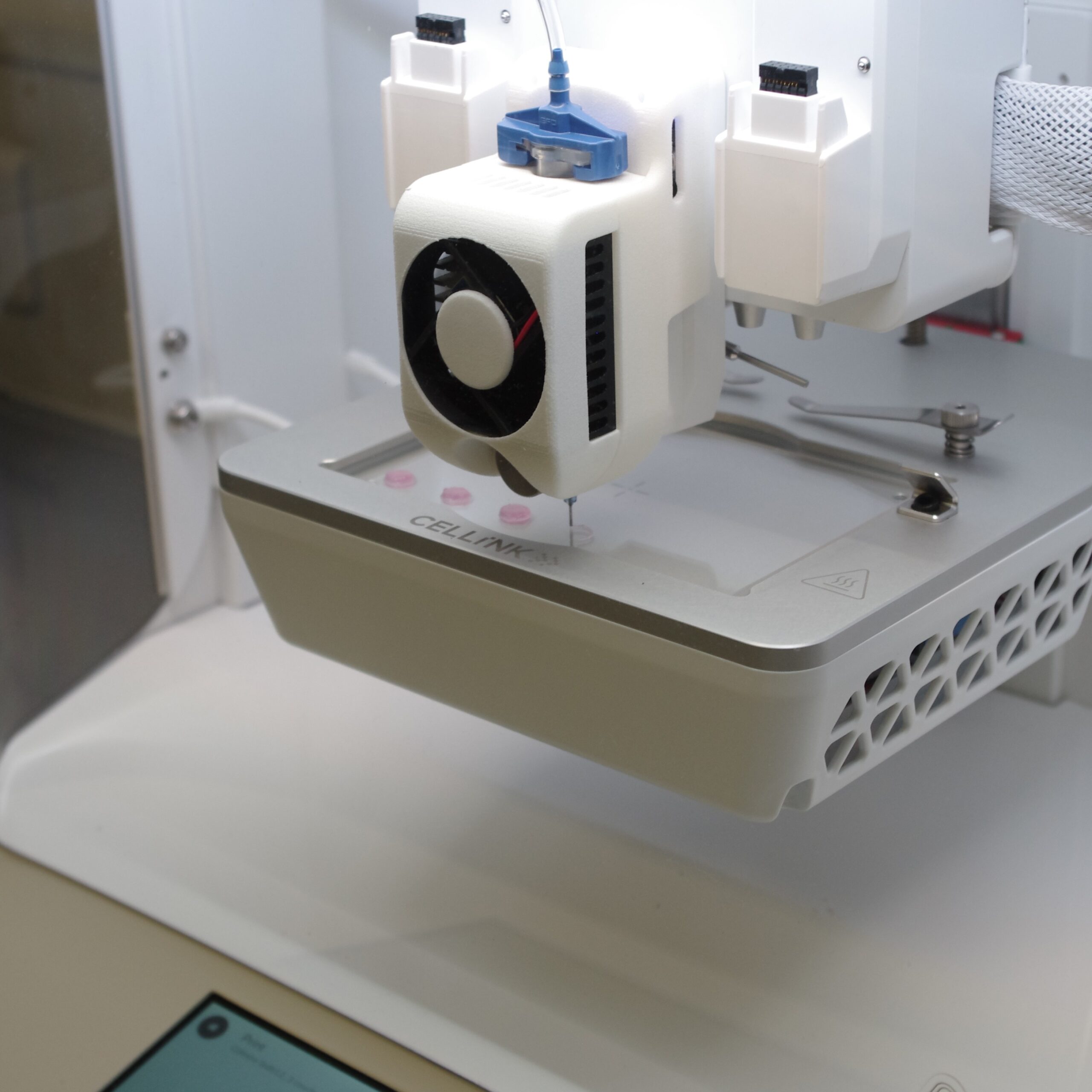
3D bioprinting of tumor cells
3D bioprinting of tumors is a technique that could revolutionize cancer research and patient care. Its principle consists of producing dozens of bioprinted constructs from tumor cells grown in the laboratory or derived directly from patients. These bioprinted models, which recapitulate the biological characteristics of the tumor, make it possible to study tumor biology in depth and to test a panel of anticancer drugs in order to identify the most effective treatment.
The results of the 3D bioprinting technique developed within the CRCL OncoPharmacology team by Aurélie Cadiou, under the supervision of Professors Charles Dumontet and Michaël Duruisseaux, are highly promising and were presented both as an oral communication and a poster at the AACR Annual Meeting in San Diego.
They demonstrate that 3D bioprinting of commercially available tumor cell lines from breast and ovarian cancers—commonly used in research laboratories—more accurately mimics tumor behavior than traditional 2D cultures. As a result, this approach provides improved prediction of the efficacy of chemotherapy, targeted therapies, and antibody–drug conjugates (ADCs).
The Lung3DPrint project also demonstrated, for the first time, that it is possible to bioprint fresh lung cancer tumors directly from patient biopsies.
Furthermore, the results show that 3D bioprinting of fresh lung cancer tumors enables the production of viable patient-specific tumor avatars that are available just a few days after the biopsy is performed. This technology therefore offers a major advantage over patient-derived organoids, which are based on 3D cell culture and may sometimes only become available several months after tumor sampling. Bioprinted tumors preserve tumor cell populations more faithfully than organoids, paving the way for ultra-personalized, faster, and more reliable medicine that would make it possible to select the optimal treatment for each individual patient.
This project was made possible through a strong collaboration between the CRCL—specifically the OncoPharmacology team and the 3D‑ONCO platform—and the Hospices Civils de Lyon, notably through the establishment of a streamlined pathway providing access to fresh tumor samples between the hospital and the laboratory.
“Improved access to tumor samples from patients is an invaluable asset for implementing bioprinting technologies in the field of cancer. This first success in lung cancer paves the way for applications in other types of cancer.”
— Professor Michaël Duruisseaux, lead investigator of the Lung3DPrint project
Given its success, this project is intended to be expanded to other cancer types and could enable broader implementation of this technology.